
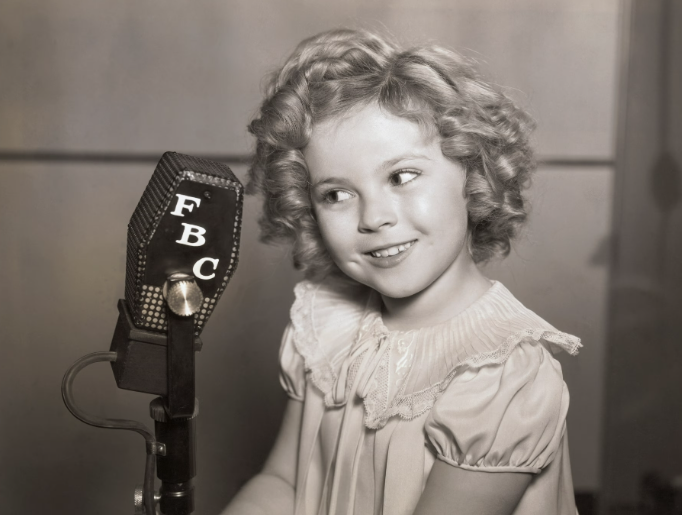
Today we spent some time in the 1930s, starting with Shirley Temple and a clip from her 1934 movie Bright Eyes. Shirley was one of the most popular child stars of the decade, and her popularity extended well beyond the movies. Children could even buy paper dolls featuring her and outfits based on the clothes she wore on screen.
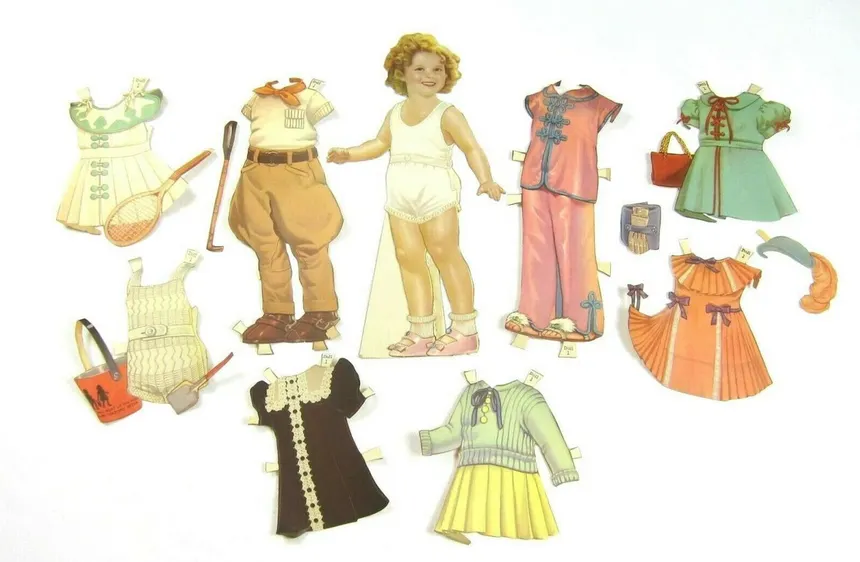
We took a closer look at a set of those paper dolls, then turned our attention to a Marx toy train from the same period. We talked about tinplate toys and how wind-up mechanisms worked. There were a few other old toys on the table, too, including a model of the Lincoln Tunnel that winds up to send little cars across it.
The Great Depression was an important part of life during the 1930s, though families experienced it in different ways. We talked about how a family’s circumstances could shape a child’s everyday life and the toys they might have had.
It was a chance to look at some things children enjoyed nearly a hundred years ago and consider what it might have been like to grow up with them.
Shirley Temple (1928–2014) was one of America’s most famous child movie stars during the 1930s. She began acting when she was just three years old and became especially popular for her singing, dancing, and cheerful roles in movies. During the Great Depression, her films offered audiences a little escape from their everyday troubles. Her popularity was so great that children could buy Shirley Temple dolls, paper dolls, books, and other toys featuring their favorite young star.
Shirley Temple appeared in about 43 feature films between 1932 and 1949. She also appeared in short films, so the total number of her film appearances depends on what you count.
Her busiest years were in the 1930s, when she became one of Hollywood’s biggest stars. In 1934 alone, she appeared in several films, including Bright Eyes, which featured her famous song “On the Good Ship Lollipop.”